

Children’s Church Lesson
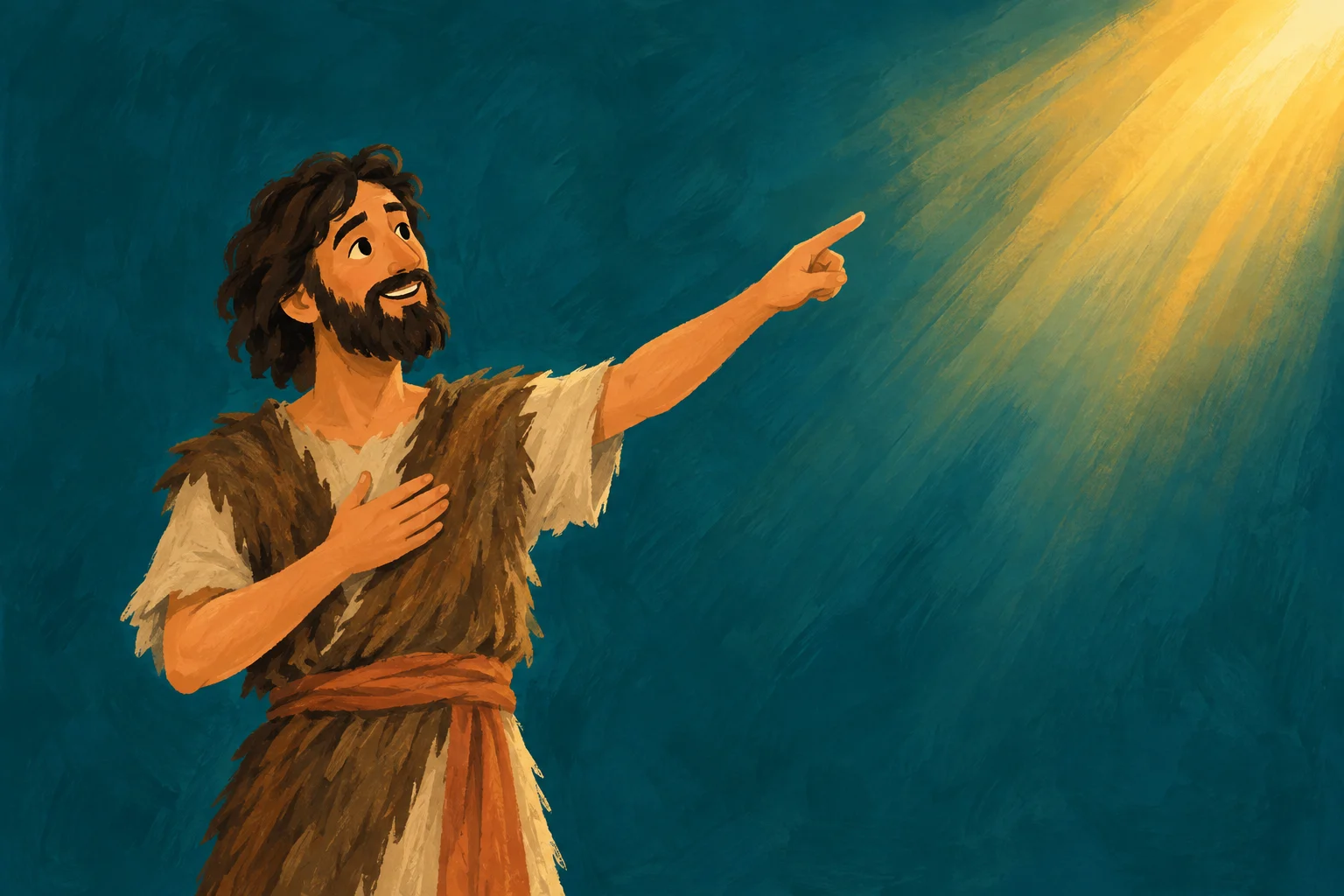
Point to the Light
December 13, 2026
John 1:6–8, 19–28
30–35 minutes
Wonder Truth
We can point others to Jesus, the true Light.
Big Idea
John’s Gospel introduces John the Baptist as a witness. He is not the Light and refuses titles that do not belong to him. His job is to point beyond himself to Jesus. Advent teaches us to receive Jesus’ light and let our words and lives point toward Him.
Word of Wonder
“He came as a witness to testify to the light, so that all might believe through him.” — John 1:7

Coloring Sheet
Print this one-page coloring activity for today’s lesson.
Download Coloring Sheet (PDF)Teach This Lesson
Open the section you are teaching. Each section includes its purpose, context, exact instructions, questions, adaptations, and transition to the next step.
How the Lesson Builds
Curiosity opens the question. Belief grounds it in Scripture. Faith rehearses a faithful response. Identity helps children connect truth with who they are becoming in God. Closing gathers the message into one truth, prayer, and next step.
Volunteer Prep – Read before children arrive
“He came as a witness to testify to the light, so that all might believe through him.” — John 1:7
TODAY’S BIG IDEA
John’s Gospel introduces John the Baptist as a witness. He is not the Light and refuses titles that do not belong to him. His job is to point beyond himself to Jesus. Advent teaches us to receive Jesus’ light and let our words and lives point toward Him.
CORE TEACHING THEME
Christian witness is not making ourselves the center. We tell the truth about Jesus and live in ways that reflect His light—humility, hope, justice, love, truth, and welcome.
LESSON SNAPSHOT
- Total Time: 30–35 minutes
- Prep Time: 10–15 minutes
- Age Range: Kindergarten–5th Grade
- Main Passage: John 1:6–8, 19–28
SUPPLIES AT A GLANCE
- Bible or printed John 1:6–8, 19–28
- Flashlight (optional) or a paper “light” circle
- Index cards
- Paper arrow shapes
- Markers or crayons
- Tape or glue
5-MINUTE PREP
- Read the Wonder Truth and Word of Wonder.
- Read John 1:6–8, 19–28 once.
- Check flashlight batteries if using one.
- Set out paper arrows and markers.
- Remember: John is important precisely because he knows he is not the center.
DETAILED TEACHER PREPARATION
WHAT YOU NEED TO KNOW
John 1 carefully distinguishes John the Baptist from Jesus. John is “a man sent from God” who comes as a witness to the Light. When questioned about his identity, John denies being the Messiah and identifies himself as a voice preparing the Lord’s way.
GRACE-CENTERED REMINDER
We do not “shine” so Jesus will love us. Jesus is the Light; our witness is a response. Christian witness is not bragging about being better than others. It is humbly pointing toward Christ in word and action.
THEOLOGY / SAFETY NOTE
The Gospel of John can use “the Jews” in ways that have been weaponized against Jewish people. In this passage, the questioners are specific religious representatives in a first-century Jewish context; Jesus, John, and the earliest disciples are themselves Jewish. Avoid broad negative statements about Jewish people.
LEADER PRAYER
“Jesus, true Light, keep me from making this lesson about myself. Give me clear words and a humble heart. Help these children see Your light and learn how their lives can point toward You. Amen.”
BIBLE BACKGROUND
John 1:1–18 is the Gospel’s poetic prologue about the Word and the Light. Verses 6–8 interrupt to clarify John’s role: witness, not Light. In 1:19–28, John is questioned about whether he is the Messiah, Elijah, or the prophet. He refuses mistaken identities and uses Isaiah’s wilderness voice imagery to explain his calling.
KEY VOCABULARY
- Witness: Someone who tells what they know or have seen.
- Testify: Speak truth as a witness.
- Light: A major image in John for God’s life and truth revealed in Jesus.
- Messiah: God’s anointed One; Christians confess Jesus as the Messiah.
- Humility: Knowing the truth about ourselves without needing to be the center.
BEFORE CHILDREN ARRIVE
- Dim the room slightly only if safe and allowed; otherwise keep normal lighting.
- Place flashlight or paper light at front.
- Set out paper arrows and markers.
- Keep the Bible open to John 1.
- Write “JESUS IS THE LIGHT” where volunteers can see it.
Curiosity – 5 minutes | Get them wondering
5 MINUTES | GET THEM WONDERING
PURPOSE
Use light and pointing to distinguish the source from the witness.
BEFORE THEY ARRIVE
Have a flashlight ready, or use a bright paper circle labeled LIGHT.
LEADER SAYS
“If I point at a light, am I the light—or am I helping you notice where the light is?”
DO THIS
- Turn on/hold up the light.
- Have everyone point toward it.
- Ask: “Did your finger create the light?”
- Explain: “John’s job was like pointing. He wanted people to notice Jesus.”
ASK
- What is the difference between being the light and pointing toward the light?
- “Why might it be hard to let someone else be the center?
LISTEN FOR
The source gives light; a witness directs attention. Pride, wanting credit, attention, or control can make humility hard.
ADAPT
- K–2: Keep it literal: “The flashlight shines. Your finger points.” Then: “John points people to Jesus.
- Grades 3–5: Ask: “Can someone do a good thing but ruin the witness by making it all about getting praise?
TRANSITION
“John the Baptist had people asking him who he was. He could have tried to make himself seem more important, but he told the truth and pointed to Jesus.”
VOLUNTEER HELP
- Short on time: Point to a light and say, “John was not the Light; he pointed to Jesus.
- Extra time: Have children point to several room objects, then identify the difference between a sign and the thing it points to.
- Remember: Never shine a flashlight directly into children’s eyes.
Belief – 10 minutes | Hear God’s Word
10 MINUTES | HEAR GOD’S WORD
PURPOSE
Teach John’s role as witness and model humble, truthful testimony centered on Jesus.
PRAY
“Jesus, You are the true Light. Help us hear Your Word and learn to point toward You with humility and truth. Amen.”
BIBLE STORY — READ ALOUD
“The Gospel of John begins by talking about Jesus as the Word and the Light. Then it introduces another man named John.” “John was sent from God as a witness. His job was to testify to the Light so people could believe. The Bible is very clear: John himself was not the Light.” “Religious representatives came to John and asked, ‘Who are you?’ They wondered whether he was the Messiah.” “John told the truth: ‘I am not the Messiah.’ He would not take a title that belonged to someone else.” “They kept asking who he was. John finally used the words of the prophet Isaiah: he was a voice crying out in the wilderness, ‘Make straight the way of the Lord.’” “John baptized with water, but he told them that someone far greater was already among them—someone they did not yet recognize.” “John shows us faithful witness: know who you are, know who Jesus is, tell the truth, and point beyond yourself to Him.”
PAUSE AND ASK
Ask: “What would it look like for your life to point to Jesus without showing off?”
LISTEN FOR / IF QUIET
Kindness, honesty, prayer, apology, serving quietly, courage, generosity, inviting others, speaking about faith respectfully. If quiet, ask: “If you help only so everyone will praise you, who is at the center?”
MAIN TRUTH
“We can point others to Jesus, the true Light. We are witnesses—not the Savior. That keeps us humble and frees us to love without needing all the credit.”
WORD OF WONDER
“He came as a witness to testify to the light, so that all might believe through him.” — John 1:7
MEMORY MOTIONS
- WITNESS: hand beside mouth.
- TESTIFY: point outward gently.
- LIGHT: open hands like rays.
- BELIEVE: hand over heart.
CHECK UNDERSTANDING
- Was John the Light? — No.
- What was John’s job? — Witness / point to the Light.
- Did John claim to be the Messiah? — No.
- Who is the true Light? — Jesus.
VOLUNTEER HELP
- Short on time: Teach three sentences: John was sent by God; John was not the Light; John pointed to Jesus.
- Extra time: Ask older children why humility makes a witness more trustworthy.
- Remember: Witness should never mean pressuring, arguing, or disrespecting someone. We can speak about Jesus truthfully and treat people with dignity.
Faith – 7 minutes | Practice the truth
7 MINUTES | PRACTICE THE TRUTH
PURPOSE
Practice witness that directs attention toward Jesus rather than toward personal praise.
K–2 DISCUSSION
- How can kind words point to Jesus?
- What can you do after making a mistake?
- What is one way to help without showing off?
GRADES 3–5 DISCUSSION
- What is the difference between witness and attention-seeking?
- How can humility and courage work together?
- When should we speak and when should we listen?
FAITH PRACTICE
WHO GETS THE SPOTLIGHT?
DO THIS
Read each situation. Ask: “Who is becoming the center? How could this point more clearly to Jesus’ way?”
SITUATIONS
- You help clean up, then loudly remind everyone three times that you helped. — It is okay to be appreciated, but choose humility; let the service matter more than attention.
- A friend asks why you pray. — Answer honestly and respectfully about trusting God; do not mock their beliefs or pressure them.
- You hurt someone and do not want to look bad. — Tell the truth, apologize, and accept that humility may cost pride.
- Someone else gets praised for a good idea. — Celebrate them instead of needing to take the spotlight.
- A child is left out. — Welcome them because Jesus values people, not because you want others to think you are kind.
- You do not know the answer to a faith question. — Say “I don’t know” honestly and ask a trusted leader to help.
LEADER SAYS
“A good witness does not need to pretend to know everything. John knew who he was and who he was not. We can be honest, humble, and courageous, then point people toward Jesus.”
TRANSITION
“Let’s make a reminder that our lives can act like arrows pointing toward Jesus.”
VOLUNTEER HELP
- Short on time: Use the helping-for-praise, faith-question, and “I don’t know” scenarios.
- Extra time: Ask older children to name one way social media can tempt people to make service about attention.
- Remember: Do not turn witness into a requirement to evangelize strangers without adult supervision or church guidance.
Identity – 7 minutes | Activity and response
7 MINUTES | POINT TO JESUS ARROW
PURPOSE
Create a visual reminder that our words and actions can direct attention toward Jesus’ light.
SUPPLIES FOR THIS ACTIVITY
- Paper arrow shapes
- markers or crayons
- tape or glue if desired.
DO THIS
- Give each child a paper arrow.
- At the point write: “JESUS — THE TRUE LIGHT.”
- Along the arrow write one action that can point toward Jesus: tell truth, serve quietly, apologize, welcome, pray, encourage.
- Add John 1:7 on the back.
- Decorate if time allows.
WHILE THEY WORK
Say: “You are not responsible for making anyone believe. Your job is faithfulness: tell the truth, live with love, and let the Holy Spirit work.”
ADAPT
- K–2: Let children choose one action from two or three options and draw it.
- Grades 3–5: Add: “I can do this without seeking attention by ______.
FINISH EARLY
Write: “I am a witness, not the Light.”
IDENTITY CONNECTION — READ ALOUD
“Jesus is the Light. That means you do not have to be impressive enough to save anyone. You can simply be truthful, humble, loving, and ready to point toward Him.”
GROUP RESPONSE
- Leader: Are we the Light?
- Children: No!
- Leader: Who is the true Light?
- Children: Jesus!
VOLUNTEER HELP
- Short on time: Write “Jesus — the true Light” and one witness action.
- Extra time: Invite children to place arrows temporarily around the room pointing toward the Bible or cross, if appropriate in your space.
- Remember: Avoid language that suggests people of other faiths or no faith should be treated as projects. Christian witness includes respect and dignity.
Closing – 3–5 minutes | Send them with the truth
3–5 MINUTES | SEND THEM WITH THE TRUTH
WONDER TRUTH
We can point others to Jesus, the true Light.
LEADER REVIEW — READ ALOUD
“John was sent by God as a witness. He was not the Light and did not claim to be the Messiah. He told the truth about himself and pointed toward Jesus. We can be witnesses too—not by making ourselves the center, but by living and speaking in ways that point to the true Light.”
QUICK REVIEW
- Was John the Light? — No.
- What was John? — A witness.
- Who is the true Light? — Jesus.
- Name one humble witness action. — Truth, quiet service, apology, welcome, prayer, encouragement, respectful faith-sharing, etc.
WORD OF WONDER — ONE LAST TIME
“He came as a witness to testify to the light, so that all might believe through him.” — John 1:7
TAKE-HOME CHALLENGE
Practice the action on your arrow this week without trying to get extra attention for it.
CLOSING PRAYER
“Jesus, true Light, thank You for shining in the darkness. Make us honest witnesses. Help us serve without showing off, speak with courage and respect, apologize when we are wrong, and point toward You with our lives. Amen.”
DISMISSAL
Say: “Jesus is the Light. Point to Him with truth and love.”
VOLUNTEER HELP
- If the group gets loud: Say, “Freeze and find my eyes.” Wait quietly, then repeat the Wonder Truth together.
- If no one answers: Give two choices or offer your own example first.
- If a child shares something serious: Listen calmly. Do not promise secrecy. Follow your church’s child-safety procedures and notify the appropriate ministry leader.
- If one child answers everything: Say, “Thank you. I want to hear from someone who hasn’t shared yet.
- If time runs short: Keep the Bible story, Wonder Truth, and closing prayer. Everything else may be shortened.
AFTER CLASS
Reset the supplies and room. Report any safety concern or important disclosure. Remember one thing that worked well.
Connection matters more than perfect execution. Be calm, caring, and point children toward Jesus.